
The Catalan Tourism Agency (ACT), part of the Department of Business and Employment, is leading the new European project Regenera4MED, a pioneering initiative aimed at transforming the Mediterranean tourism model to make it more resilient, conscious, and capable of regenerating its environment. The project, co-financed 80% by the European Union's Interreg Euro-MED program, has a budget of over two million euros and will run until the first quarter of 2028.
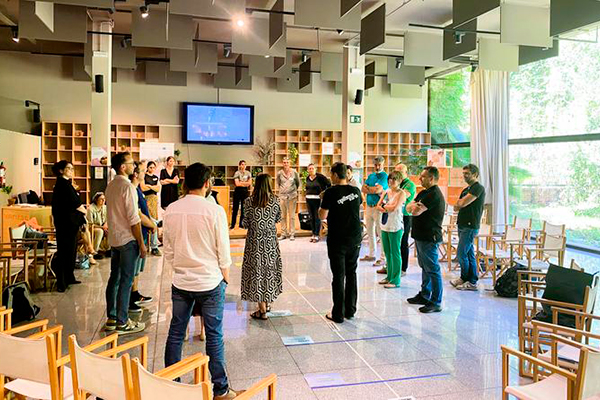
The Catalan Tourism Agency is hosting the launch of the project today in Barcelona, with the participation of partners and other related international organizations to kickstart Regenera4MED. The event began with an inaugural masterclass by Anna Pollock, a renowned expert and pioneer in regenerative tourism. Following that, a co-creation workshop was held to provide tools for identifying regenerative experiences in the territories of the consortium.
Throughout the day, related European initiatives will also be presented, such as the Interreg Sustainable Tourism Community or the MED4REGEN project.
Under the slogan "Towards a Mediterranean model of regenerative tourism," Regenera4MED aims to go beyond traditional sustainability, promoting practices that actively restore and enhance the environmental, cultural, and social values of the most touristic territories. This paradigm shift will be developed across six pilot regions: Catalonia, Liguria, Abruzzo, Crete, Sardinia, and Split-Dalmatia.
In this project, Catalonia and the other partners will develop new regenerative experiences focused on leaving a positive impact on the territory. Additionally, an innovative tool for self-assessing tourism experiences will be created, along with a set of resources to ensure the scalability of the project's results to other Mediterranean areas.
In Catalonia, the developed tools will be implemented in the pilot area of Barris i Viles Marineres, with the support of the Diputació de Barcelona and the Costa Brava Girona Tourism Board.
The ACT is collaborating with nine partners to develop a regenerative tourism model in the Mediterranean: the Italian regions of Liguria and Abruzzo; Crete; the Research Center of the Slovenian Academy of Sciences and Arts; the University of the Peloponnese; the Conference of Peripheral Maritime Regions; the consultancy B. Link Barcelona Strategic Projects; and the tourism agencies of Sardinia and Split-Dalmatia.